Tuesday, July 8, 2008

Righteous Richland (mountain bike) Sprint Tri

I swear I don’t spend time thinking of stupid things to do. I’m not fond of self torture either, yet ended up with a heavy dose of both. It’s a behavioral disorder. Two sprint Tris: Race the River or Righteous Richland? Ryan Brown was signed up for his hometown race in Richland. It’s an off road tri, he’s an off-road racer and trains on this course. We’d have a sleepless unskilled off-road racer drive more than two hours to an unfamiliar course to race the local favorite and three-time defending champion. I figured Roger would whoop me, but Ryan would whoop me by more, so I chose Righteous Richland for a better challenge. Why sleep when I could race?

I put borrowed ITU aero bars on a borrowed mountain bike. It took some thick pads in the clamps to hold the bars in place … sort of. My hope was to limit my losses riding aero on the paved section. Vertical Earth couldn’t be aware of my poor mountain biking skills. Otherwise, they wouldn’t have loaned me a mountain bike. After work I drove the whole way without dozing off. I had just enough time to get set up and do the short warm-up swim I promised myself after Ironman. The race: ½-mile swim in the river, 12-mile bike and 5K run.

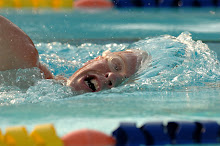
I quickly took the lead, but a guy was trying to outrace me. I eased up and got on his toes. Oh, so it’s time to get lazy? Nope. I’m just racing smart. Meanwhile, the smart/experienced ones arced wide to let the current carry them to the lead. I was distracted until the swim exit angle was 45 degrees, then 90 degrees and finally, I was swimming back toward the exit against the mild current near shore. Next time I’ll probably remember to adjust my aim for the current and not lose my lead.

My 6:50 swim was top 5, but Ryan was ahead. I hoped for a :30 buffer. Game over! Refusing to listen to those silly details, I charged the hill, and blazed T1, exiting in first place. My split was 1:25 … sort of. Arriving late kept me from hearing that the mount line was just out of T1, normally a no-brainer. We were in a park and had to work our way to the road. Hello rookie! Mountain bikers ride off-road. I’m running as Ryan rides past me. I got my T1 split at the road.

One thing to know about Ryan is that he’s a fast biker. I’m talking Roger fast. If the bike I was riding had a panic button, I’d push it. Instead, I just went hard and hoped I could finish biking without getting passed by too many. Remember how the aero bars needed pads to fit better? I didn’t. I almost crashed as the pad squished and the front end dropped almost to the tire, making it feel like they were made from a garden hose. Sorry volunteer guy. I wasn’t trying to swerve at you like that.

The bars were terrible, but more stable and comfortable than resting my forearms on the handle bars like a real biker can. Mountain bikes feel like they can corner at any speed. After nearly making it into the river for the 2nd time this race, I decided to be more careful. At the off road section, I was thrilled to be just :15 down. I scanned the terrain and worked the single track for all the speed I could get. Rolling up to an arrow pointing to the right, I went wide, leaned and powered into that corner.

Apparently God isn’t required to make corners like people do. It was about 100 degrees, covered with sand and just wide enough to roll a basket ball between the trees and bushes. It’s OK that I wasn’t on the path, but not OK that my face, neck, hands, and arms were getting raked by the trees and bushes. Why waste time with glasses to protect my eyes? Seeing where I was supposed to go wasn’t working for me anyway. I had no idea where Ryan was. I didn’t know where I was. It reminds me of youth group … way back when I was half my age. The pastor said “If you can’t follow the straight and narrow, then swerve across it as much as possible.” That’s how my ride went.

I hit nearly every branch and bush on (or was it off?) the course. Nearing the road I was told Ryan was 1:45 up. The good thing about his lead being 7 times bigger is that it’s less than 8. Allegedly he had to stop for a quick CO2 blast to fill a low tire. I had a low tire too, but was planning on airing it up after I crashed (the fastest way to stop). I made it back to T2 in 2nd. My ride was 34:39 (20.78 MPH). I had scratches from waist to helmet. Note to self: Next time wear a shirt and glasses retard.

A high school XC relay dude took off while I was in T2 for 18 seconds. I didn’t expect to catch XC or Ryan (around 1:30 to 2:00 ahead). On the first corner, I realized I forgot to synch my shoes. That’s just too darn bad. I can tighten them when I sit down to cry until I get dehydrated at the finish line, but for the moment, I was busy. First lie, “I can pass XC guy within a quarter mile.” Naturally, I try it and caught him. Next lie, “If I run really hard for a mile, then I can walk. It’s over anyway.”

I pushed so hard I sounded like a drowning asthmatic cow. I saw a guy up the trail on his daily run. Pretending it was Ryan, I gave chase. To my surprise, it was Ryan. Sneaking up on him was out of the question. He was having a good run (according to him), but I was closing in fast. With a mile to go, I ran up on him. He sped up and I thought, “He was just cruising and is now going to crush me.” I called myself some mean names to get fired up (works every time). So I’m psychotic! Instead of letting him surge ahead, I ran stupid fast and passed him trying to make it look easy. I wasn’t fooling anyone.

He lost the draft, so I kept pressing to keep him from coming back. I pushed for 1:30 to make him think I could run that fast. It doesn’t make sense to run faster than I was capable to make someone believe I could run that fast. My legs were fine, but my lungs and guts didn’t totally love it (stole that last part from Jessi). I thought he was holding a small gap and waiting to sprint past me, so I kept pushing and doing time/distance math (I love math) to coax myself to the finish. To my surprise, I got there before he did.

My run time was 17:20 (5:34.73/M) and my finish time was 1:00:34. Ryan came in :28 seconds back. I don’t know if the run was long or short. I just know I got lucky. I did what I thought I couldn’t do. Rather than my traditional 180 second walk, I stumbled under a tree and fell on my face … still gasping violently for air. A nice man named Steve told me to keep walking to keep lactic acid from pooling up. I was OK with lactic acid. I was not OK with moving. I wondered if the challenge of beating the odds is worth it. I thrive on that more than winning. If winning mattered, then I’d avoid the fast guys and the races they have an advantage in, especially when I have to travel on no sleep. A few times this year I’ve gutted out wins over better athletes. I know I’m not the fastest, so I guess I have to be the toughest.

Wednesday, July 2, 2008

Military World Championships (continued)

Somewhere around 3:00 AM on Sunday, 15 June, I woke with terrible back and hamstring pain. They didn’t just hurt, but also had a terrible burning sensation. I’m surprised the pain didn’t wake me sooner. After my back injury in 1997, I’ve had trouble sleeping pain free on most beds. At home, I have a king sized, deluxe Tempurpedic, which is adjustable and has a massager and heating blanket. Even with that, I rarely have a great night (day) of sleep. I didn’t have trouble in California, but I took two-hour naps during the day and slept less at night. Three nights in Estonia really did a number on me. None of my little tricks helped make me comfortable.

At 3:30 I had to take action. My biggest race this year was 6 hours 46 minutes away. It’s only dark from 1 to 3 AM, so I went for a walk, taking short breaks to stretch. After a couple hours working on it with little success, I went to get the doc. As a matter of principal, I do not take meds for anything but extreme necessity. I can handle pain without a word of complaint, but I’m not fast enough to compete against top pros at all. Competing when I’m so tight that I can’t bend over far enough to touch my knees really had me worried. I’ve never been that tight.

I took a muscle relaxer and something for the pain as the doc, massage therapist and a team mate started working on me. I’m glad Dr. Bales (AF Team Mate/Surgeon) wasn’t there to work on me. He always asks to cut me open. Although he promises to sew me shut, it doesn’t seem that appealing. After six hours of work, I was barely able to sit and reach all the way to the middle of my shins. I was glad they were able to help so much and thankful my team helped me get my gear to the transition area and alleviate my high level of stress. I don’t mind showing up at last minute for a race as long as it isn’t a national or especially a world championship.

As I got ready, I added the week’s training numbers. I hadn’t swam since the previous Sunday at a sprint in California in which Team USA had free entry. We took the top four spots. I was 2nd to our top guy. I biked twice for 32 miles. My run was way down at about 21 for the previous 7 days. International travel is hard on training. The numbers were similar on the way home. I didn’t want to do a bunch of training before the race, but preferred to do more and get some quality. Spending the final week without swimming had me worried. It’s very important to success in ITU. Throw in my super tight hamstrings and back and my usual worry free approach was a high anxiety affair.

I was ready to race in time to see the masters men start. McCoy’s cap ripped, so he found another green cap, but a brighter shade, which helped identify him. He was in good position as they came out of the water for the 2nd loop. That’s about all I got to see of his race. With the four waves and a two loop swim, it was a bit of a crazy start, but I lined up at the back of the USA corral and started patiently behind an extremely fast field of swimmers. Back home, I’m one of the faster swimmers when I bring my A game. Here, my very best would still have me behind more than 75% of the swimmers.

I found feet to follow, but was too tight to get good extension or roll. My usually weak kick, which is more like a twitch, strained my back, but I did my best. As I ran onto the beach after lap 1, I looked back to see how many athletes I was leading. I can process numbers pretty quickly and was determined to get an accurate count. As it turns out, counting was pretty easy. It went like this … there’s one. Look closer behind me and scan behind that swimmer. OK, so I’m next to last. This sucks! After all these years waiting for a wet-suit swim at MWTC, which really improves my rank, I have an atrocious swim. I really motored the second lap, closing in on the leaders (ha ha), passing three to finish 82nd of 86 with a time of 22:57. The fastest swim time was 16:25!

After seriously contemplating a DNS, I was glad to be out of the water. I would finish, regardless of how long it took. I was willing to take all day. I ran hard to my bike, but knew drafting was going to be tough on this course since I was almost on my own. I saw a Swedish guy I’ve raced with since 2003 at MWTC. We are pretty comparable on the bike and run, but he’s always followed me out of the water. He’s been trying to work on his swim and turned pro this year (racing half Iron), so like our plan last year, we were going to work together on the bike together. I’ve always beat him out of the water by quite a bit and came in thinking this year would be no different, but I was wrong. I took a moment to eat a gel in T1 and headed out onto the three-loop bike course that was well over 40K. T1 time: 1:01, which was :28 slower than the fastest T1. I didn’t even pretend to care.

Once on the bike, I could feel the strain on my hams as we immediately tackled a 10% grade hill. My Swedish team mate (I’m their adopted team mate since I’m Swedish too), made up the few seconds as I caught the top Canadian triathlete (they use real military members like the US, but it would have been cool to see Whitfield race). Having two guys I could communicate with and trust to work with me, with one of them being a strong cyclist (Sweden), seemed like the perfect way to get myself back into this race. Well, I could have Armstrong’s US Postal TDF Time Trial Team pulling me and I wouldn’t get “into” this race, but you know what I mean. After my first pull heading into the next hill, my Swedish friend and Canadian guy attacked. Lucky for me, they caught a small group a bit ahead. They took them a moment to recover before deciding to pass.

I caught the group and rested a moment just as they locked onto the wheels of my two companions descending a hill. That group began to fall apart at the next hill. I worked my way through dropped cyclists and pulled through, then peeled off. Again, I was attacked by Canada and Sweden. I was irritated they’d do that, but amused that they’d attack a nobody at the back end of the race instead of using me to help them catch more riders. My run isn’t the stuff of legend, so it’s certainly not feared in Canada and Sweden. Back home, I’ve only been outsplit once this year in the 2nd run or 1st in triathlon (by Jason Jablonski … who hasn’t). I’ve outsplit some fast guys, but at this race, I’d likely be somewhere in the middle. So the senseless bike battle continued. I’d get dropped and have to spend about a mile catching back up. I wasn’t going to let them get rid of me.

Starting lap 2, they put in a vicious attack on the first hill, right after I pulled. They saw a gap and started trading places to increase their advantage and catch the next group. The group was small, but caused them to slow in a couple places while working their way through. After spending everything I had, I was able to reel them in a half lap later. Three USA guys were in the pack, which I thought could help me. One was struggling after a pull and I helped him back into the line. I was hurting too, so I wasn’t able to watch out for him any more. Two of them fell out quickly. The third lasted for a few miles. My legs recovered and I decided I wasn’t going to do my share any more. I’d skip a pull each time to rest up for the next attack. As expected, they kept attacking, but my plan helped me stay on their wheels. With a half lap to go, they realized they weren’t getting rid of me and settled down. We biked around 26.75 to 27 miles, but I don’t have an accurate number. I mention that because my time was 1:06:50.6, which was 68th fastest. Oddly enough, it put me in 68th place. The fastest bike time was 58:35.4 (amazing speed and team work to do that on a long hilly course).

My T2 wasn’t the unmotivated effort of T1, but I had trouble lugging my bike as my back and hamstrings tried to lock up. T2 took :39 as I kept an eye on Canada and Sweden. I was going to make them pay. I know they’re big words for a small fish in a big pond. Don’t make me angry. You won’t like to race me when I’m angry. My legs were fried from the attacks. An XC run on tired legs played to my strength. As expected, Sweden was running strong. I needed a couple laps to recover while red lining. Starting lap two he had put about :10 more on the :09 he had starting the run. My legs were coming back and he was too. Canada had been dropped early and my race was about catching Sweden. Early in lap 4, I made the pass. Normally I’d extend a hand or offer an encouraging word, but I wasn’t in the mood after his bike tactics. To help me make the pass stick, I keyed on another runner and decided to run him down. In the end, I was only able to pass three people on the run. Physically I passed a lot more than that, but they were women or runners a lap ahead of me. I didn’t get a measure on the run course, so I don’t know how accurate it was. It had challenging terrain with plenty of turns and scattered with people. My time was 36:23, which was good for 45th (43rd was the middle I expected). Only three runners were able to break 32 and just nine were under 33 minutes, so it was a pretty tough course. .

Bottom line for the race was 2:07:50, good for 65th place. Compare that to a two-time Olympian (4th or 6th in 2004) with a time of 1:49:25 and you can see just how big the gap in speed is. I will say that he had a phenomenal group to ride with. Germany swept the podium, but had several other teams/riders willing to work together to turn it into a runner’s race. That kind of team work probably shaved off several minutes in several ways, but it still blows my mind how fast these guys are. I was the only US athlete, male or female to have a slower swim time than at Armed Forces. All other 16 athletes from the US swam much faster. If I swam like they did, then I would have gone under 21:00, which I’ve done in the pool and in accurate open water swims in the past year. That would equate to biking a couple minutes faster as part of a 21-person group. Being part of that group would mean plenty of rest and no chasing attackers. My legs wouldn’t have been fried and I could have run a minute faster. All said and done, that would mean I could have shaved five minutes and 13 places. Gotta love the “what ifs.”

The US Elite Men’s team placed 13th. They score the top three from each team. Since I was 3rd on my team, I was a scoring member for the first time. I’ve been last in my previous three attempts. My run time was the fastest of the US, which is also pretty cool. Mike McCoy was 4th in the master’s division, after falling a few seconds behind bronze on the run. He did bring home gold as part of the top masters team, which scores 2 men and one woman. Following the race, we had several hours to get cleaned up and recover before awards and closing ceremony. In the past, it’s been immdeiately after the race, causing many to pass out from standing at the position of attention in the hot summer sun for over an hour. I don't know about you, but after the hardest race of the year, I don't like to immediately get cleaned up, put on a suit and stand motionless in the hot sun. There's no stretching, scratching, drinking, or adjusting in any fashion, etc. Troops stand motionless and silent, end of story. This time we’d also have shade and cool air to keep us comfortable. Following awards was another great dinner and a post race party. I was having trouble getting around and pretty tired, so I turned in early.

The next day was culture day in Tallinn, Estonia. We toured the city on bus first, then our tour guides took us on foot through the city for shopping, food, sight seeing, etc. It was a really cool experience. Following our tour, we had a final athlete dinner and party before heading to our room for a short night of sleep before a long trip back. At the airport I got to hang out with the podium-sweeping men’s team and female champion from the German team. They’re so nice and encouraging, saying that I could be that fast if I trained full time like they did. It’s much appreciated, but if I had that kind of potential, then I would train full time. Three of us were heading into Chicago, but they had double booked our seats. I missed home terribly and wasn’t giving up my seat and encouraged McCoy and the other US guy to keep their seat. A flight attendant came back to find us in matching uniforms and holding our ground. Upon hearing that we were US Troops coming back from representing the US in the Military World Triathlon Championships, she moved us up to business class. We had seats that reclined all the way back, thick blankets, remote tv/movies, all sorts of free food and beverages, a buffet and a bathroom with windows. It was a pretty comfy way to make an international trip.

Now I’m home and writing this the week after Ironman, so I feel like the season is over. I’m sure I’ll find some challenges to keep me from getting too lazy. On the other hand, it’s nice to relax after having so much pressure to peak three months early.

Looking back at the German team and several others, I'm puzzled about their athletes' inclusion into their military. Their national federation puts their top ten members into the military for the purpose of competing. That's their job. When they're no longer more competitive than another athlete for their country, they're removed from the military. What purpose does that serve a military? Our athletes are in the military first and try to earn those spots. If they succeed, then great. If they don't, then they still serve in his/her job. In the process, they become fitter along with all of those who try to get a spot on the team or WCAP. We become a resource and motivation for other troops who want to compete for a spot or just want to get in better shape. It breeds fitness and competition that runs completely through the ranks. That is an important difference that the other militaries failed to match. It also helps develop a fitter fighting force for the US. Not all of us will be racers and some are terribly unfit, but for the most part, these programs are well worth the cost and I'm honored to be recognized as one of the top athltetes in the US Armed Forces. That's why I always proudly wear my colors to the races in which I compete.

Tuesday, July 1, 2008

Military World Triathlon Championships (MWTC)

Every prior year, since I started racing for the Air Force in 2003, has had suspense in the roll down. I’ve never automatically qualified for a spot. Troops are always having to go to war or other TDYs or deployments or just can’t get away from work. This year I was able to qualify automatically and it feels pretty darn good.

The US men's elite team and Armed Forces finish place: Nick Dason - 3rd (Army), Ken Corigliano - 4th (AF), Michael Bergquist - 6th (ANG), John "Jay" Calvert - 9th (Navy), Eric Bates - 10th (Navy), and Phillip Giarraputo -18th (Marines).

The team would consist of 17 athletes from all branches of the US military. We send six elite men and women, three masters men and two masters women. In all, there were five from the Army, four from Air Force, four from Navy, three Marines and one Coast Guard. Although I’ve been on Active Duty for each of the last five MWTCs, I’m one of two Air National Guard (ANG) troops representing AF. I volunteered for full-time duty to help out during the rough times, but know I have it far better than a lot of our troops. My friend, Jolene Wilkenson, wasn’t able to race for the Air Force this year, so she has been missed. I was pleased that my friend/training partner Mike McCoy qualified to compete in the master’s competition. In fact, he qualified for a roll down spot in the elite division, but we only give a masters athlete an elite spot if all the masters’ spots are taken and he/she is faster than the next elite, which has happened only once.

We compete against top ranked ITU racers in the elite division, so we’re primarily competitive in the masters division. Unlike a lot of other militaries, our athletes are actual military troops. For a very select few, we have a program called World Class Athlete Program (WCAP). If they qualify, then they become a full-time athlete for up to two years leading into the Olympics, but must be a military member before getting a spot in the program. We had three this year (Tim O’Donnell, Justine Whipple and Jolene Wilkenson). Other militaries have permanent spots in their military for top athletes in certain sports. The catch is that their national federation puts their top athletes into these military positions. Once an athlete fails to be more competitive than an athlete waiting for one of those positions, then he/she is removed from the military. Our WCAP athletes return to the job that they had as a military member after the Olympic Games and have to wait another two years before applying again.

I consider myself one of the lucky ones. Although I’m an elite amateur, the US has only one sanctioned ITU race for those of us who are not pro. That race is the Armed Forces National Championship. I get a week off work with pay and an all-expense paid trip to compete. Once an athlete qualifies for the MWTC, he/she gets two more weeks of the same. We have our team of 17 athletes being taken care of by a team captain, assistants, docs, etc. We don’t have to worry about missing work or pay, because that is work. We actually get paid more. All of our travel, housing and food is paid for and taken care of for us. The only thing we need to do is be an athlete for another two weeks. It’s the sweetest of deals. Going top six at Armed Forces is tough work, but not so tough that I feel like I deserve this.

In the first week being on Team USA, I’d get extra sleep, took as much time as I needed to comfortably fit in my training and otherwise had a great time. I’d go body surfing with McCoy, watched movies I’ve been wanting to see for months, dined out a few times and yes, I rode my bike more than 50 miles!!! It was absolutely great after such a rough work schedule this last year … several years. We were issued Team USA gear. We were given T-shirts, polos, shoes, socks, shorts, sweats, bags, hats/visors, warm-ups and a couple racing suits … I’m sure I’m forgetting something. Our official racing suit for worlds never came in, despite having been ordered well in advance, so it’s a good thing we had back-up suits. Speedo and Adidas took really good care of us. It’s tough to order suits in advance for a team that hasn’t been selected yet. That said, we weren’t able to have our names on the suits like you see in other major events, but I’m OK with that. Unlike other world events for amateurs, I didn’t have to buy my gear. The back-up Speedo Fast Skin has a tag of $270 alone. Between travel, gear, wages and other expenses, the price tag for me over the month was in the ball park of $7,000 to $8,000. Needless to say, I’m really grateful.

The team traveled to Estonia through Atlanta and Stockholm. After arriving in Estonia, we had a three-hour bus ride to the race site, but it was along with athletes from a few other countries. Things were starting to get interesting and fun. I chatted with Paul from Austria. He’s a pro that I met last year in India for the Military World Games. This is my third consecutive year, so the faces and names are starting to get familiar. It made the long ride go by quickly, but I was also pretty tired and ready for the 30-hour day to end.

We arrived on site late in the evening, but the sun was still up. In fact, we were so far north that my 11 PM run was just after the sun set. We ran a 3.65-mile run on a beautiful trail that reminded me a lot of the back side of the trail around Medical Lake. My body was tired and got winded from the pace around 7:30/mile, but it felt good to move my legs. When we got back to the bed and breakfast that housed Team USA, I was ready for a shower and a long night of sleep. After the water concerns in India last year, it was great to have water that was safe to drink and shower in. I slept really well as the rest of the team had jet lag. After working nights for years on end, being 10 hours ahead of Pacific Standard Time, I was going to bed fairly close to when I normally did.

The next day I unpacked my bike and made sure it was working, but didn’t feel like riding it. I didn’t feel like swimming either. To be truthful, if I didn’t have a streak of nearly four and a half years of running daily, then I wouldn’t have exercised at all. My goal was to see the athlete village, talk to as many strangers as possible and take in the experience. We had a 2nd floor pool, computer room, a resort dining facility, track, weight room and plenty of other things that you’d find at a resort/athlete village. It was Friday and our race was Sunday, so I’m pretty sure my fitness wasn’t going to change much anyway. After last year’s flat in India, I was shooting for a little revenge. Last year I didn’t feel like I belonged. Though I’m fully aware that the race of my life wouldn’t be competitive here, I was determined to do my best ever.
Marines on the left, Navy in white, Army in light green and AF on the right.

My second morning there was also after another great night of sleep … around 12 hours. My legs and back were pretty stiff, so I needed to get out and about to limber up. My run was really uncomfortable, so I decided to hop on the bike to preview the course and loosen up some more. Despite riding a very comfortable 17.5 MPH, my hamstrings and back were still too tight. The course was constantly rolling hills in the woods around the lake, which made for a scenic getaway. Aside from my body, everything was working fine and in order, so I got cleaned up for the opening ceremonies, athlete dinner and social. We all wore our full service dress during the evening. I was proud to march in there as a member of Team USA. We weren’t just athletes wearing a military uniform, like several other countries. We were members of the US Military who were there to compete as athletes against 18 other countries. Regardless of each individual’s service in his/her military, it was truly an honor to be there.

My evening ended early as I headed back to get some rest before the big day. The masters men would start at 10 AM, the masters women at 10:01, the elite women at 10:08 and the elite men (and me) would start at 10:16. I had plenty of time, but didn’t want to take any chances. I was there to represent my country and the US Military, not to stay out late doing selfish things that would prevent me from being at my best.

* This just in via e-mail. Team Mate, Justine Whipple was the World University gold medalist. She’s a two-time collegiate national champion, two-time Armed Forces national champion, last year’s Military World Games silver medalist and reigning under 23 national champion (6th at worlds).

More to come in a day or two …

Monday, June 23, 2008

Ironman Coeur d'Alene: Retrobution

If you read about my first Ironman (below), then you understand that I had a score to settle with the Ironman. Few seemed to believe that I could participate without racing. I love to race, but I don't love Ironman. It's haunted me for years. My plan was to set the governor on easy for the swim and bike, then let 'er loose for the run.

With the Armed Forces Championship and subsequent Military World Championship, I've spent my last five weeks on a road bike. My TT bike had a few adjustments while gone, so all I was able to do was do an easy ride to familiarize myself in the two days I had here at home after all that traveling. I was really worn out, but Ironman Coeur d'Alene was about finishing without an epic story of overcoming disaster after disaster. Racing ITU is about the swim and run, which is where my focus has been all year. Ironman is about going long, which is something I haven't had time to train my body to do.

I was aware going in that it was almost like doing an Ironman without training. I avoided thinking about the race or even prepping my gear until the day we headed to Coeur d'Alene. I was worn out from being away from home since May, so prepping for a race and being gone for another four days wasn't appealing to me. Why is it that a race that takes an entire day also has to take the two days before and the day after from check-in to awards? Amanda was on the ball and my laziness was probably aggravating, but she handled it like a champ. Honestly, if it weren't for her, then I would not have made it to the start line. She nudged me along, right up to the race start. She gets a gold star for making sure I had the opportunity to beat that old memory.

The cold water wasn't going to bother me. Compared to Armed Force's 52 degrees, this would be a lot better. I even opted to leave the aqua socks behind. I walked in, submerged myself and let water into the wet suit a couple times before the start. I was right on the line and planned to blast out of there to avoid being drowned in the masses. The start was smooth for me, but I had a rare breathing problem that I've only experienced one other time. In swimming, on a scale from good to bad, it's bad. I breathed on both sides, but felt like I was about to drown, which is pretty scarry. Knowing the majority of 2300 people are behind me and would swim right over me, didn't make it any easier. I tried to signal for help, but none was in sight, so I had to keep going. Switching to backstroke didn't seem to help. Maybe the anxiety caused a temporary conversion disorder. Though I was initially off the front, I was quickly swallowed by the field as I tried to settle down and get my breathing under control. It took a half lap before I started to settle down. At that point, I just found some feet and followed at a very easy pace for the remainder of the swim. My time was 1:04:27, which was good for 177th overall. I stuck to the plan, kept it easy and was glad to be on solid ground. I really don't like swimming. It's the only sport that if you stop in ... you'll die. I didn't do a warm-up swim due to being terribly undertrained and didn't think I could afford to waste any energy warming up. After that experience, I'll make sure to do a warm-up for every race in the future. That was scarry. Also, the swim may have been a little long.

T1 was somewhat amusing to me. As an ultra-competitive racer, I've wanted for years to have just one race where I could cruise along and enjoy it. That's what this race was for me. Since I was on the sharp end of the field, people were in a hurry. I actually had to tell my helper to slow down. I soaked in the atmosphere and watched others briefly before I finished up and got on my way. My time showed it too. It took me 6:29 to get through T1.

The bike was my biggest worry. It would be my longest ride since 1999 and literally more twice my weekly average. My legs are trained for about an hour in the saddle, while my system is only trained for about three hours of work. Today was going to be three to four times that, so I couldn't afford to get caught up in the highly charged atmosphere. People were cheering machines, but I resisted the urge to ride in the moment. My body was telling me I could go faster, but my mind said absolutely not! Trying to keep track of my fueling and making sure my average stayed under 20 MPH kept my mind busy when I wasn't chatting or joking with other riders. At mile 40, I was feeling a bit over my head. Despite the easy effort, I was spent by mile 75. I struggled to the finish of the ride. My time was 5:43:18, which is better than I expected. To my amusement, I actually ended up injuring my right wrist from shifting for nearly six hours. Since I haven't been on my TT bike for weeks and certainly don't have much practice shifting gears for more than an hour, my wrist swelled up and is very weak and sore. So, if you're like me and just don't get much time to ride, make sure you practice your shifting.

In T2, I was prepared to take whatever time I needed. My only goal was to shoot for a sub 3-hour run. I'm absolutely certain I can do it, especially now that I'm looking back on the race. I changed clothes, socks, watches, fueled up, went to the rest room and did a quick stretch. T2 was 6:00. Oddly enough, my cumulative time was 7:00:14. If I ran a sub 3, then I'd also have a sub 10:00:00 overall. That gave me a little extra motivation since a finish time hadn't even crossed my mind. The only time I thought about was the run.

So I go busting out of T2 and onto the run with the Garmin helpning me keep pace for a sub 3 (sub 6:52/mile). After busting out of the gates, I needed constant pace checks to keep my legs under control. The McCoy family, Bob and others were out there cheering like it was an Olympic sport and had a gigantic chalk sign for me that took the entire road! They had one for Amanda too. It took a couple miles to find my pace, but I was flat out exhausted. Seven hours of exercise was too much, but I really wanted to give it an honest effort. Somewhere around 5.5M, Tri-Fusion was cheering for me like I was winning this thing. I was still very focused at this point, so I don't remember who all was there and don't want to leave anyone out, so thanks to all of you. I remember Tiffany nearly bringing me to laughter and Jessi cheering like a champ. At 10K, the pace felt comfortable, but I couldn't shake the feeling that I'd love to lay down and go to sleep. It was really fun flying past all those other participants. It took me back to grade school when I simply had fun going fast.

Normally a hill like the one at the turn wouldn't bother me, but I was nearing 8 hours of racing and it was just too much. I slowed up to save my legs for the rest of the run, but it wasn't enough. Despite fueling so well, I just didn't have the range. My average pace was 6:40 at mile 8, so I decided to ease up and see if I'd recover by running 7:15 for a while. At mile 12, it was apparent that I was fighting a losing battle. I could have made mile 16 at 6:52 pace, but would be completely spent. The other option would be to slow to 7:30 and cruise on in for a 3:05 to 3:08 marathon. To do that, I would have had to be concerned with my overall time, which I wasn't. That had nothing to do with my goals, so I shut it down and walked a while as I tried to figure out what to do. A brisk walk would put me in around 12 hours, which got me thinking that I could cross the line with Amanda. I would be fine with that time, which would be almost 5 hours faster than my only other Ironman. Throwing around the numbers for a while, I figured it would be cool to make my goal to beat my PR by six hours. Unfortunately, I didn't decide that until the turn on lap 2, so I had to run sub 8:00/mile. It would have been a lot easier if I made that decision before I burned so much time walking. I measured the course at 26.36 miles, which is .14 longer than the standard 26.22 (26.21875 if you want to be more precise). Yes John, I ran the tangents.

In the end, I managed to get my adjusted goal of 10:51:16 for a 6-hour PR. I don't think Ironman keeps track of the biggest improvement, but I'm sure 6 hours is right in there. My marathon time was 3:51:02, which is 4:30:57 faster than my first Ironman marathon, more likely to be a record. My final resting place was 191st. That's a lot better than my 1646th place in my first try. I didn't leave with another story of stories. The Ironman beat me the first time. It's all tied up now. We'll see what happens next time. I hope it's not any time soon. Amanda set a 2 hour 38 minute PR, so we can both leave feeling good about it. I hope she hasn't signed me up for any more of these things. There's an outside chance that I'll be picked for the Air Force Team to race in Hawaii. If that's the case, then I won't have the luxury of going easy.

For now, I'm feeling good about my performance. Pulling up on the run before I annihilated myself was the smart thing to do. I'm still able to walk around and even keep my running streak alive at 1,636 days in a row. On some days, it's not the most healthful thing to do; however, it's the long-term change in lifestyle that makes it worth the trouble.

Ironman Canada 1999 vs. Ironman Coeur d'Alene 2008
Swim: 1:01:59 vs. 1:04:27
T1: 3:39 vs. 6:29
Bike: 7:01:12 vs. 5:43:18
T2: 22:13 vs. 6:00
Run: 8:21:59 vs. 3:51:02

Total: 16:50:51 vs. 10:51:16

Friday, June 20, 2008

Armed Forces Championship 2008

Team Air Force posing on the beach for one of the sponsors. I'm on the left, McCoy with his fist in the air.

This was my goal race for the year. It’s tough to peak in May when living in this climate, especially this year. On the other hand, there’s too much on the line with this race. Twelve men and six women are selected from each branch of the US military. The top eight men and four women score for their team. We also have Team Canada racing this year. The Air Force is the defending champion for the second consecutive year. It’s my sixth time on the team and was glad to have my training partner, Mike McCoy, coming along with me from Fairchild. The race starts on the California coastline near Malibu.

We were essentially paid athletes for the week, flown to the race, put up in the beach hotel, given clothes and racing gear while we did whatever we needed to do to get ready for the race. I needed rest. It’s a major perk for me to be able to sleep as much as I’d like at night. Since I was in my taper, it made for a fun and relaxing time.

A new theme for this year is time conservation. In the past, I’d get to a race site hours before the race to make sure everything was perfect. This year I get to races at last minute and enjoy a lot more of my day at the expense of a small amount of time on the race course. Our race started at 10:08, so I stayed in bed until 9:30. Our racks were numbered and I was staying at the race site. When I got to the transition area, it was absolute chaos. We race the only amateur ITU race sanctioned by USAT, so we had to follow ITU rules. We had bins instead of a transition area. They made an error and put too many bikes per rack. Brake levers overlapped adjacent brake/shifter cables, handle bars ended up locked, pedals, shoes and derailleurs tangled with the same on the next bike. I couldn’t even reach my bin with bikes hanging over it. We had pandemonium! ITU officials gave in to reason and provided another rack.
Around 70 men start packed shoulder to shoulder. We needed a lot more room in the water.

I went down to the water, lined up and waited to start. I lined up at the back and on the right side. It was a beach start against a very exclusive field. I’m normally a mid pack swimmer there and wanted to avoid the beating I received last year. Once the gun went off, I went over the start line and made my way to the far right. I plunged into the 52 to 53 degree water (not sure which ended up being official) and started swimming untouched. It freezes the hands, face and feet, but strangely, I was handling it very well. It helped that I was alone. My first thought was actually “I wish I had trained harder.” I quickly countered with “I did train harder.” I wish it helped more. The best I could manage was 21st place male with a time of 22:39.
Everyone had a beet red face and hands from the frigid water. You can see the line where the wet suit no longer covered the skin.

It’s hard to tell if it was long or short. It didn’t matter to me. I was just glad to hear the announcer call out “Mike McCoy from Fairchild AFB.” I knew he was right in front or just behind me. It turns out he was just behind. It’s a good thing too. My timing chip came off with my wet suit and I had to fish it out. T1 was 1:01, which moved me up one spot to 20th. Mike was :15 back, so I was going to wait for him. Surrounded by marines, I started barking orders to start organizing, but also that we were going to wait for McCoy. Once together, we did our best to reel people in and make them work in our pack. It was a bit of a mess having a bunch of amateur racers with a few pros trying to race draft legal. We got it done though and I was able to move up to 14th place after the bike leg of 57:53. I had a terrible T2 also. My breaks wouldn’t slide over the new rack they put out for us, so a few attempts later, I was onto the run. My split was :30, moving me into 13th place.
Three AF and three Marines trying to work together. I'm on the left with McCoy in the center. Our pack just picked up a faster swimming AF Team mate who held on for a half lap of the four lap course.

It was really windy and hot on the two loop 5K. I managed to reel one guy (David Steele) in before we completed a short dog leg. On the way back and onto the long dog leg, Steele picked up a really nice draft behind me. The wind was really tough to battle. He drafted like a champ, but I couldn’t afford to slow up enough to let him pull, even if he wanted to. I needed to be 6th. I don’t know how many times he clipped my heel, but apologized numerous times before finally telling me he’d buy me a beer. I told him that I didn’t mind and that it was just a race that I felt lucky to be a part of. OK, so I was doing a lot of gasping for air in the process, but that’s what I told him. I was pleased with myself for being a great sport while helping a Marine do better against my AF team mates. Before the second 1.5M stretch of brutal head wind, I dropped him and passed my final victims to secure the 6th place spot. I had fifth in my sights, lying to myself by saying that I could catch him from :25 back, which only made me work harder for the same place. My run time was 35:04. Like it seems every year, I had the fifth fastest run. My finish time was 1:57:11.
I never push harder than I do at this race. After a few years of finish line face plants, the docs let me know before I start that they'll be there to catch me at the finish. As you can see, there's nothing left and I'm going down, but they were ready to drag me away with my toes in the sand.

The end result assured me a spot on Team USA and an all expense paid trip to Estonia. McCoy finished 13th overall in 2:00:26, but earned a spot on the Masters Team USA. He’s one fast dude. AF men finished 2nd to Navy, lead by Olympic Trials 6th place finisher Tim O’Donnell. The AF women finished third after dominating the women’s division for years. Our top female, Jolene Wilkenson, was in an accident the week before the race and won’t be able to train/race for two months. She was 2nd last year to Justine Whipple who took sixth in under 23 worlds in Vancouver and took silver at last year’s Military Worlds.
This is my traditional pose. This time with the Red Bull arch making a nice background. I was given more Red Bull than I could drink in three weeks, but I defied the odds and finished up with a day to spare!

This will be my 4th time on Team USA. If getting to wear our national colors and have a chance to compete against top world competition, several of which have been in the Olympics, I get to miss another two weeks of work on top of the one I was already given. Of 2.69 million troops, many train hard and race hard for this opportunity. Unlike other Team USA teams and programs, we’re completely taken care of. We still get paid our wages without having to use our leave. We don’t have to buy our uniforms or equipment, pay for our rooms, airfare or food. In fact, they actually pay us more while providing us a great support staff. Between that and the Air Force Team, I get far more than I deserve. It’s a rare opportunity, so I share the details in order to better understand the experience, since it’s far more than just another race.

Friday, June 13, 2008

Ironman Canada: The Run (Part 4)

Despite all that had gone awry in my day and the days before, I viewed the run as a clean slate. My 9:30 was out of the question, but Hawaii was not ... at least not yet. I zipped into transition with the hope of a fast T2 to get me on the road right away. Seconds turned to minutes as volunteers failed to return with my T2 bag. The search team grew, but my bag simply wasn't found. There was little I could do that they weren't, so I decided to get a quick massage. Around 20 minutes into T2, I decided that I had to get going, even if that meant running without shoes. I had run a marathon without shoes once due to shoe problems, but that's another story. Just as I was getting up to go, a volunteer ran over to me with my transition bag. Apparently my number was called in by the ambulance driver during my final rest in the ditch at Yellow Lake during the bike leg. At that time, my bag was removed before they confirmed that I was out of the race.

With my gear in hand and even more time lost, I finally finished T2 in 22:13! I was all fired up at the start of the run and blasted onto the run course like I was doing an open half marathon. That pent up emotion was put in check about a quarter mile in. That big swollen knot on my neck was still causing me breathing problems. After nearly passing out, I slowed to a walk. This was the point when I finally knew Hawaii was not in the cards. The whole day began to sink in as I began a nearly 26-mile walk of shame. Just as I began walking, I heard a couple ladies say "Way to go! You're looking good! You're almost there!" Of all the people in the race, this line wasn't for me. I had trained full time for months and was visibly in great shape. It was obvious that I was bloodied up and hurting. On top of that, I was walking at about 400m into the run. I was not looking good. I wasn't doing well and was anything but almost done. It was the breaking point for me. I wanted to punch them, but kept walking and walking and walking.

Although this was anything but the race I kept telling myself that I was going to have, I never let it stop me. The first goal, and most important, in any race is to finish. That was the least I could do. I developed a strong desire to feel the weight of that giant maple leaf finisher medal around my neck when I crossed the line. One curious thing about me is that I'm a notoriously slow walker. I just can't step it out. As I walked through my first full mile, which was 2, I did the math and found that I was walking too slowly to finish before midnight. I needed to go about 20 minutes/mile, so I picked it up. It was a lot easier than running, but forced me to reflect on my experience. It was anything but fun, but gave me a chance to forge the type of athlete I'd be in the future. I gave myself little goals to achieve before quitting, but each achievement had to be satisfied with another.

The hours went by a little more slowly than the miles did, but I was making progress. I made it to the turn and found that the chicken broth was really good and warmed me up. I had nothing in special needs there, much like the bike. I didn't expect to be out there that long. It was getting darker and colder and if you know me, cold is something I don't do well. Still, I pressed on reminding myself of how great it would feel to have that heavy medal around my neck at the finish. After it got dark, I became one of those people who trudged along with the glow stick. I was officially one of them. It's a lasting immage of Ironman, but one I didn't want to be a part of. With the darkness came more cold. I was shivering as I made my way. Compassionate volunteers and spectators offered me shirts, coats, pants and gloves. I wouldn't have any of it though. I have honor and don't want any part of breaking the rules. I push the limits of rules, but that's as far as I go. Outside assistance isn't allowed. After all I've been through, being DQed or given a time penalty was too much.

As I finally made my way back into town, I was the last person on the road that had a chance of making it before midnight. A group of strangers gathered around me to encourage me along. Although I had hours of being alone, I wanted to be left alone. I never saw myself as that guy who needed people to pull me in. I really didn't need it that day either, but it's the situation I was in. If they only knew the problems that would cost me more than 7 hours. Quitting or failing was not an option. Like my situation with the ambulance, this race would not take me alive. As long as I was alive, I'd finish. With two miles to go, a stranger lied to me and told me I had less time than I had on my watch and that I needed to get going. I took a moment to think about it and came to one conclusion. What if he was right? I didn't want to round that final corner and head to the finish line thinking I had conquered the ultimate bad day, only to find that somehow I was off by a few minutes and didn't make it after all. Pushing through all of that only to be denied my medal would feel like I had been cheated out of my finish and robbed of my efforts.

With about a mile to go, I ran for the first time in over 8 hours. I was cruising along at about 5:50 pace for the final mile. I blasted past six people in the process to keep from finishing last. I crossed the line in 16 hours 50 minutes and 51 seconds. My overall finish place was 1,646th. The real kicker was my marathon, which took 8 hours, 21 minutes and 59 seconds. It's one of the slowest marathons in Ironman history. That wasn't my goal, but it kept me from failing at my number one goal: finishing. It took all day, but nothing I encountered was able to keep me from being an Ironman.

After crossing the line, I was barely able to breathe. Volunteers came up to tell me that they didn't have any finishers towels or medals because they had more finishers than expected. Despite gasping for air, I couldn't help but to think of my ironic twist of fate. They tried to take me from the line with a gurney, but I was going to walk to the med tent. They wanted to stick me with an IV to hydrate me, but I told them I had been going too slow and drank too much to be dehydrated. My problem was breathing, not drinking. As I laid there under that sun blanket, I looked around the room at all the others. It seemed that I was the only one without an IV. That had to be my victory.

The next day, I made my way back to the center to get my medal and finishers certificate they promised me. When I finally got to the counter, I gave the lady my name and she said she couldn't find my time and asked me what it was. I replied quietly "16:50." She wasn't able to hear me, so she asked me again. I said "please don't make me say it any louder." I was really embarassed. That would be a fair 5K time, but for an Ironman, it was not. I told her again and she looked up and down and didn't see my time anywhere. She told me I didn't make it before midnight and wasn't an official finisher. Wrong! I had gone through hell and was going to get my medal. I wanted the race director or someone else to help me out in my emotional state. I was told that the race director was helping the Hawaii qualifiers and would be busy for quite a while. I know I lost my cool a bit, but for all I went through, I'm OK with it. I said I was happy for the Hawaii qualifiers, but before they get seconds, I want what I earned.

It wasn't necessary, but I explained my bad day and how hard I fought just to finish and wasn't leaving without my medal. Eventually she relented and got the race director for me. He had someone get in the data base and found that several of the final finishers had omitted run and finish times. They found mine, verified that I did make it before midnight, but still didn't have medals. Long story short, I left without my medal. They did mail it to me and I put it on and wore it around like a proud senior citicizen does at work on the Monday after a weekend race.

So that's my first and last Ironman. A couple hours to get my packet, two nights of no sleep, no swim cap nearly causing me to miss the start, nearly being drown, a panic attack, having the snot beat out of me in the swim, my T1 gear being scattered, getting sick on Pepsi, crashing and being rubbed raw and having my neck and back out of allignment, getting stung on the neck, an allergic reaction making it difficult to breathe for the rest of the day, having to lay in the ditch seven times to catch my breath, drenching my eyes with my sweat band, spraying my eyes out with Gatorade, having paramedics try to pull me from the course, having my number called in as a DNF, a 22:13 T2 while they found my gear before I headed out for a barefooted marathon, running a quarter mile before I nearly passed out, walking the marathon in 8:21:59 while nearly going hypothermic and finishing 6th from last and barely before midnight unable to breathe or feel the weight of that medal around my neck, only to be told the next day that I didn't actually finish. Needless to say, I haven't attempted another one ... yet.

Thanks for reading my story. Stories aren't complete without a comment, so please leave one before you go.

Wednesday, June 4, 2008

Ironman Canada: The Bike (Part 3)

On firm ground, I made my way to my bike. Lucky for me, someone either tried to head out on my bike or use my gear. What I found was my things were not how I left them, which is in my obsessive order. They were sorted through and tossed on the ground. My transition was 3:29. My best guess is that it cost me about 1:30. It wasn't a big deal, but things weren't going my way and I was on a tight budget with my minutes and seconds.

Heading out on the bike, I felt pretty strong considering the long swim and my ordeal. With over 200 bikers in front of me, I had plenty of riders to pass and did just that. I needed to ride around 5:15 to 5:20. That would be tough, but something I knew I could do. As I rode, I kept doing time checks, calculating my needed pace with my 9:30 goal. Riding with only one water bottle, my plan was to alternate Gatorade and water every stop. As I rode into an early station, I asked for Gatorade, grabbed my bottle, secured it and accelerated away. A short while later, I pulled it from the cage at an opportune time and guzzled most of it down before I realized it was Pepsi! Some like it, but it made me terribly nauseated in previous exercise sessions. Canada was no different.

A few minutes later and I felt that nauseating pain in my gut. Getting to Hawaii wasn't going to be easy and I couldn't afford to go without fluids (forcing the fluids out ... if you know what I mean) until the next stop, so I pressed on. The race wasn't meant to be a pleasure cruise, so I told myself that this is the way it's supposed to be. I decided it would be best to ask for water only from that point and rely on my foods to fuel me. I didn't want them to confuse the beverages again.

As I continued to power my way past those in front of me, I went through somewhat of a residential area. The details aren't terribly clear since I wasn't familiar with the area, and still am not, but more bad luck came my way. Some lady out riding her bike turned onto the road we were racing down. She was clearly unaware of what was going on and simply drifted to the right to make a turn. I was tucked and aero after a short descent, so I didn't have enough time to react. She drifted across my path and clipped my front wheel with her rear wheel. I went down hard and skidded to a stop. Skin makes for a great breaking surface.

I didn't have time to check myself out or have a conversation with the appologetic lady. I hopped back on my bike and took off. While riding I was able to determine that I was rubbed terribly raw on my left hip. My left shoulder, arm, lats, quad and knee were covered in dirty road rash streaked with my blood. Miles later, my neck and back were aching from being bumped out of allignment. It was clear that I was going to have to earn this finish the hard way. My 9:30 looked harder and harder with every passing event, but I wouldn't allow myself to give up on my goal.

Richter Pass was tough, but I worked my way up it. I was able to stand and climb. I see pain as something separate from my effort, so I endured both just the same. The trip down the back side of the mountain proved to be more of a problem than going up. I had to stand to stretch out my back and neck. As I stood, riders were tucked and aero and flying past me. It was hard to give that time back, but it was necessary to make it through the race.

Once at the bottom, I started getting some more time back, but I was terribly uncomfortable. I was nauseated, banged up and out of allignment. I'm not sure it was the best decision, but I didn't have anything in the special needs section. It was all about time and I didn't think there was anything that I really needed at halfway. As I blazed through special needs I was able to get an idea of how many riders were catchable on the out and back. It didn't prove to be too useful other than motivating me to keep the pressure up.

Just past special needs on the way back I encountered my biggest problem of the ride. I saw a bug swirl around in a clockwise circle as we colided. It smacked me on the left carotid. I'm not sure if it stung me, bit me or if it was the impact, but it really stung. I continued to press on as I started to get somewhat breathless and dizzy. It got so bad that I eventually had to get off the bike and catch my breath. It took nearly passing out to get to that point.

My stop was at an aid station where I laid in the ditch face down. My forehead pressed against the sweat band in my helmet, drenching my eyes in my own sweat. As my eyes burned I reached for my bike and fumbled around for my water bottle. When I found it I rinsed out my eyes, not with water, but Gatorade. They gave me Gatorade instead of water! A nice volunteer got me a bottle of water and helped me get cleaned up as I forced my eyes open. My back was seizing up, so I actually got a massage right there to help loosen it up.

After that pit stop, I got back on and started making my way toward Yellow Lake. My neck had swollen up with a golf ball sized lump, making my breathing problems worse. It was bad enough that I had to stop six more times to catch my breath. I was losing time rapidly, but it was all I could do. The top of Yellow Lake was celebrated with another stop to catch my breath in the ditch. Traffic was one lane only and not moving.

As I laid there, I heard a vehicle come up the road and stop. That was odd given the traffic and race. I heard a couple doors open and close, then a couple more doors open. Something hit the ground and was being rolled toward me. I poked my head up out of the ditch like a gopher to see what was going on. It was an ambulance and the two paramedics were coming at me with a gurney. Nope! I wasn't going to let it end this way. Not after what I'd gone through and when I had a goal to keep me going. I jumped up, grabbed my bike and took off. As I ran away, I said "you won't take me alive!" The driver said "looks like we cured another one."

Going down the other side of the pass was painfull, but I was able to do a lot of coasting. My last few miles into Penticton were so unpleasant that I thought running would be better. This day was getting longer and longer, but I kept telling myself that I had to keep pressing to get that 9:30 and make my way to Hawaii. Sure, I was in denial, but it kept me going. In the end, my ride time was 7:01:12. That was good for 1,396th on that leg. I had lost a lot of places and a ton of time. I wasn't giving up though. I came blasting into T2, just like I would have if nothing had gone awry at all that day.

The worst of my pain was over, but my problems would continue and the day would grow longer.